
10 Proven Benefits of Chess for Kids
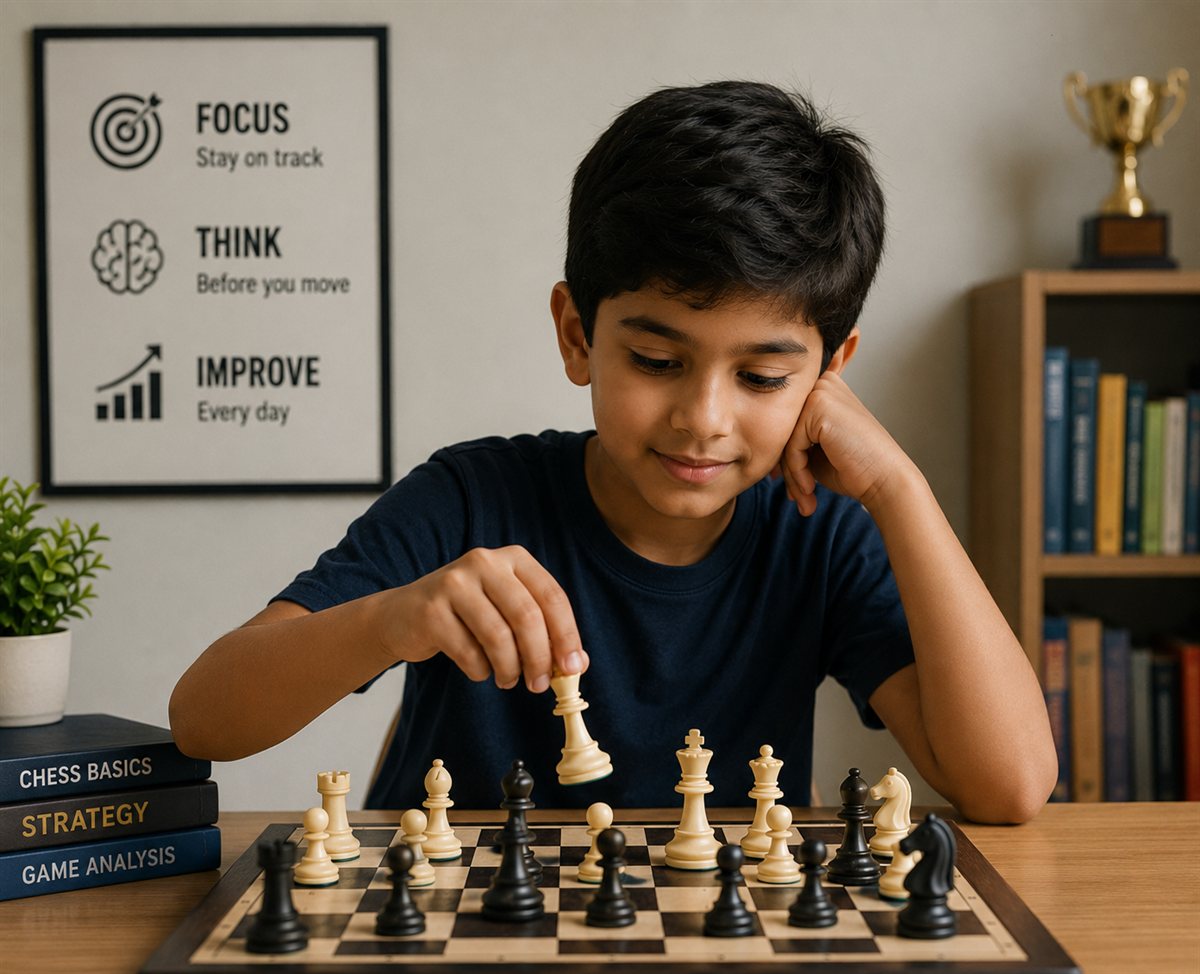
Chess is often called "the gym for the brain" — and for good reason. Beyond being a beautiful game, it quietly builds skills that help children in school and in life. Here are ten of the biggest benefits we see in our students every week.
1. Sharper focus and concentration
Every move asks a child to think before acting. Over time, that habit of pausing and concentrating carries straight into homework and the classroom.
2. Stronger problem-solving
Chess is a constant stream of little puzzles. Children learn to weigh options, spot patterns, and choose the best path — the foundation of good problem-solving everywhere.
3. Better memory
Recognising positions, recalling openings, and remembering tactics all give working memory a gentle, enjoyable workout.
4. Improved maths and academic performance
Chess naturally reinforces logical thinking, sequencing, and spatial reasoning — skills closely linked to mathematics. Many parents tell us their child's schoolwork improves alongside their chess.
5. Patience and impulse control
The board rewards children who slow down and resist the first tempting move. That's patience and self-control, practised one game at a time.
6. Planning and foresight
"If I do this, what happens next?" Thinking a few moves ahead teaches children to plan and anticipate consequences — a genuinely valuable life skill.
7. Creativity
There are millions of possible games. Chess gives children room to imagine, experiment, and find their own clever ideas.
8. Resilience and learning from losses
Everyone loses games — even champions. Chess teaches children that a loss is simply feedback, not failure, and that improvement comes from trying again.
9. Confidence
Mastering a skill that adults respect, earning a level-completion certificate, or winning a friendly tournament gives children a real, lasting confidence boost.
10. Social skills and sportsmanship
Shaking hands, taking turns, winning graciously and losing well — group classes and tournaments quietly teach the manners of good competition.
Chess gives children a safe place to think hard, fail safely, and grow.
How to unlock these benefits
The benefits above come from consistent, well-guided practice — not the occasional game. A structured curriculum, a coach who knows your child, and regular friendly competition make all the difference. You can see the level-by-level path we teach, or read about the best age to start chess.
What the research says, honestly
Many studies have looked at chess and children's learning. Some report benefits for concentration and mathematics, while others find small or no effects once other factors are considered. That is why we describe benefits as things many parents and teachers observe rather than guaranteed outcomes. What nearly everyone agrees on is that chess is a challenging, enjoyable activity that rewards patience, careful thinking and learning from mistakes.
How to get the most from chess
- Keep it enjoyable. Children who like chess keep practising.
- Be consistent. A weekly class and short regular practice beat occasional marathons.
- Use a good coach. See who teaches your child's class.
- Review games together. See how to analyse a game.
- Balance with school, sport and rest. See balancing chess and school.
Where to start
Begin with how to play chess, check the best age to start, and try fun games at home. Then try a free class to see how your child responds.
Frequently asked questions
What are the benefits of chess for kids?
Many parents notice better focus, patience, planning and resilience. Research on academic effects is mixed, so we do not promise grades.
At what age do children benefit most from chess?
Children can enjoy chess from about age 3 or 4 in a playful way, and benefit at any age with good teaching and regular practice.
Explore The Digital Chessboard Academy
- Courses: Beginner Explorer to Champion Track
- Pricing and plans
- Meet our coaches
- The Parent Portal
- Free FIDE rating calculator
- Chess learning options compared
- Online chess academies compared
- All chess articles
Give your child these benefits
Book a free demo class with a certified, FIDE-rated coach and see the difference for yourself.